Lakes Around Us
UX Research, Publication Design
5 months
Individual Project
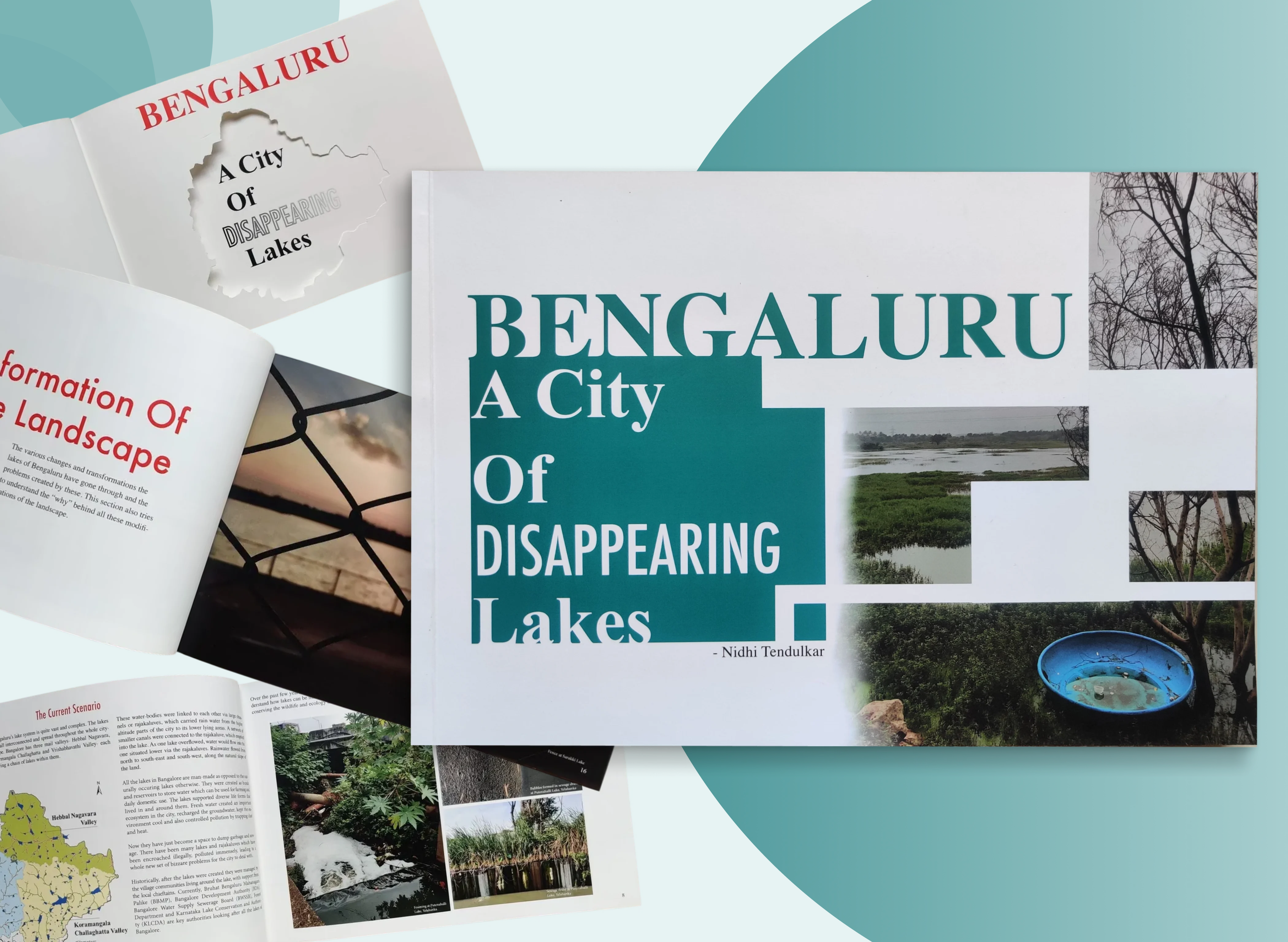
Project Info
Scope
This project involved studying Bangalore’s lake systems in terms of their history, evolution, and the challenges they face, such as pollution and encroachment. The goal was to then translate this research data into a form that conveys the information easily while raising awareness about the lakes’ significance and the need for urgent conservation.
My Role
Since this was an individual pre-thesis project, I lead the research, analysed findings, and connected environmental issues to the city’s changing landscape. Using these insights, I designed a publication based narrative and visual structure, making the information clear and engaging to help strengthen public understanding of lake conservation.
Process
Research - Data Analysis - Book design - Prototype - Output
Why?
Lake is freshwater- contributed to the very small percentage of freshwater available to us.
Source of water for Bangalore, as there are not many known major rivers running through the city.
Various activities carried out near and in it- fishing, farming, etc. Hence it is a source of income for many people.
Drastic reduction in number of lakes and increase in pollution of the water.
Challenge the future- will result in depletion of resources and will affect other aspects of life like health, food, income.
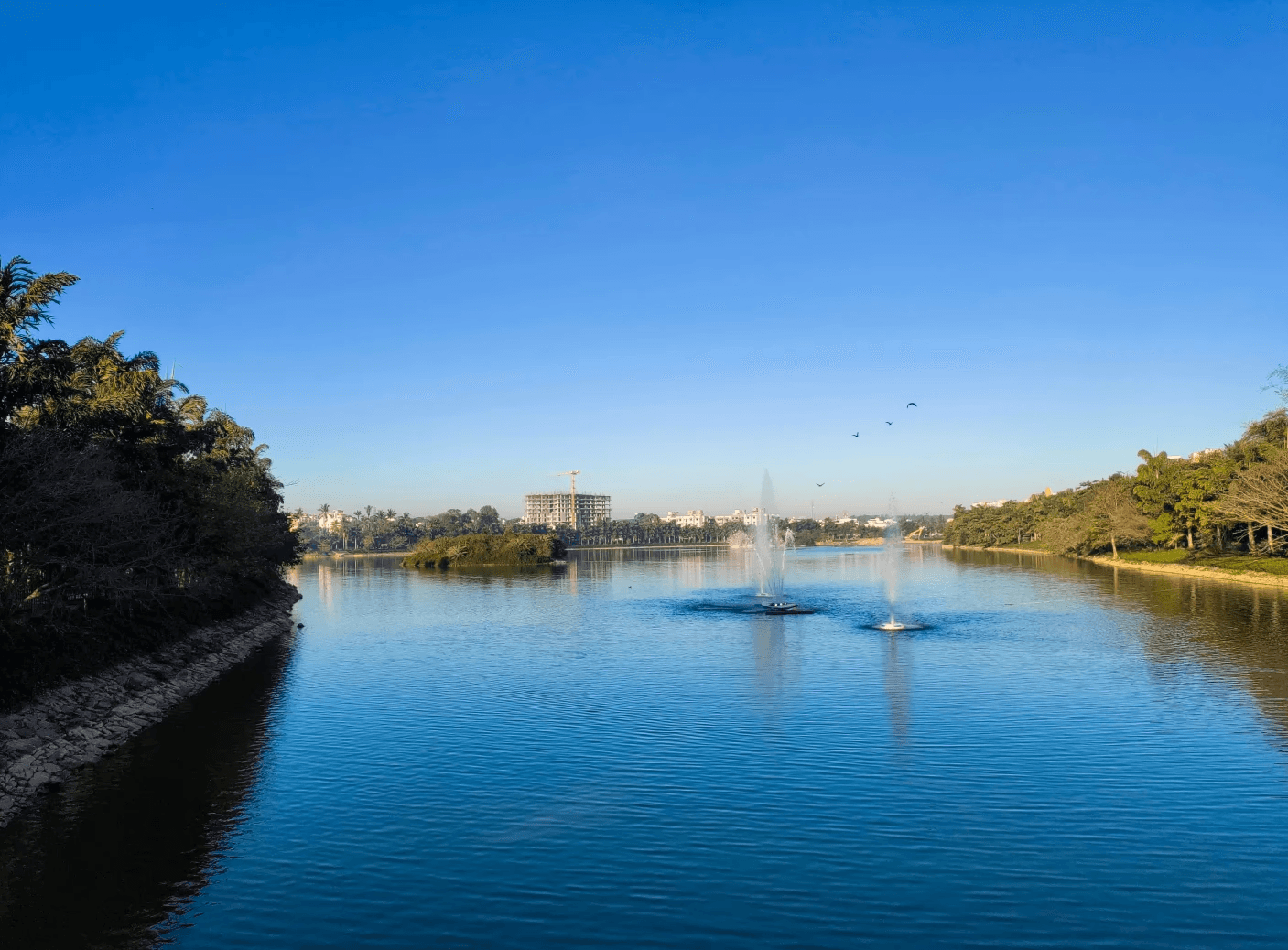
Broad Context
Understanding the role of lakes in the city of Bangalore. (exploring a bit about the water systems of the city)
Understanding the interactions of people with the lakes.
Observing the evolution of the lakes over the years.
Focusing on the reasons and effects of these transformation of lakes.
Understanding if the people living around are aware of these things.
Trying to predict the future of these lakes and the environment around it?
Timeline of the Site Visits
Here is a timeline of the site visits that took place during my research. Zoom into the images to read my visit annotations


Stakeholder Mapping
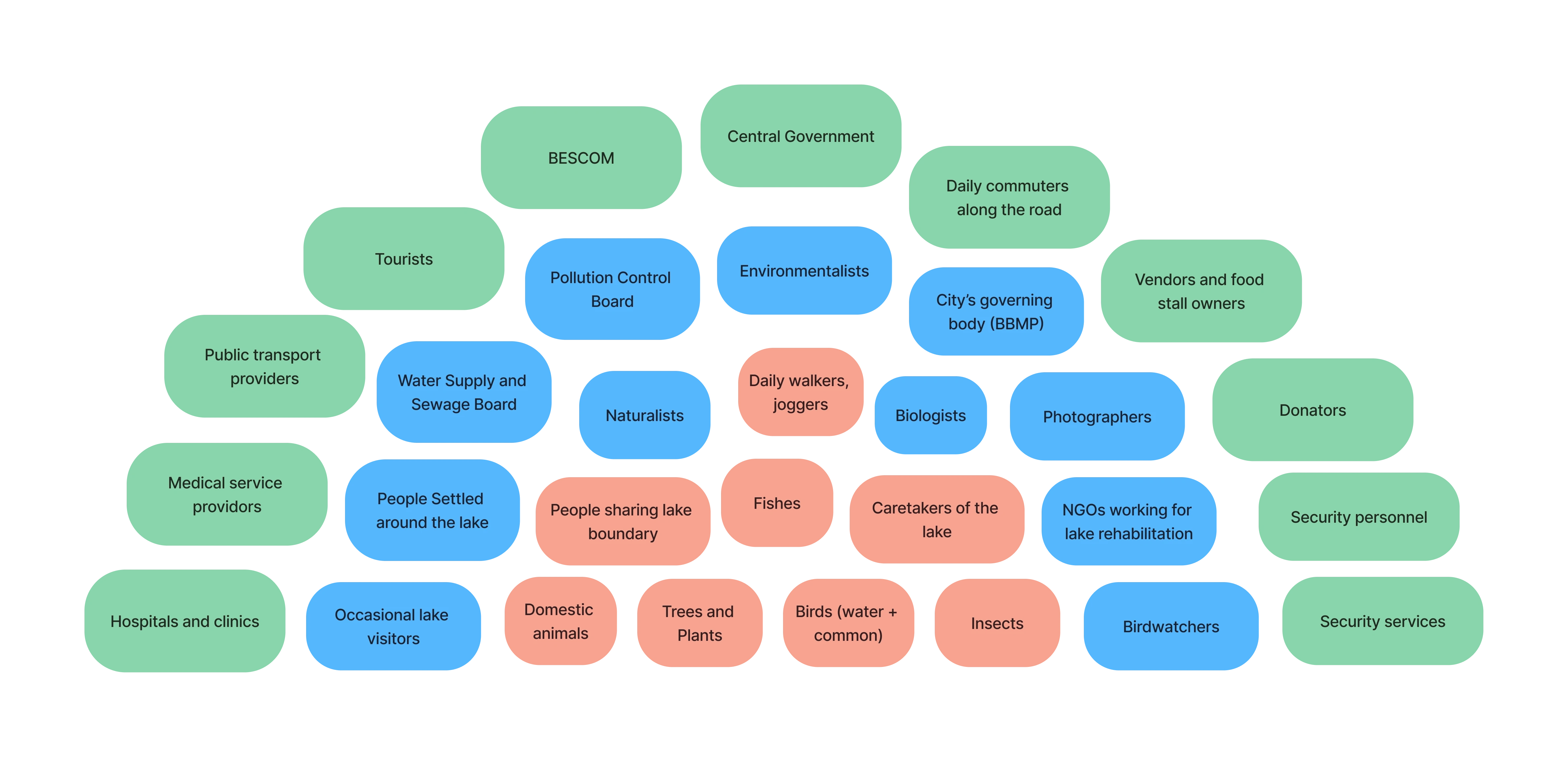
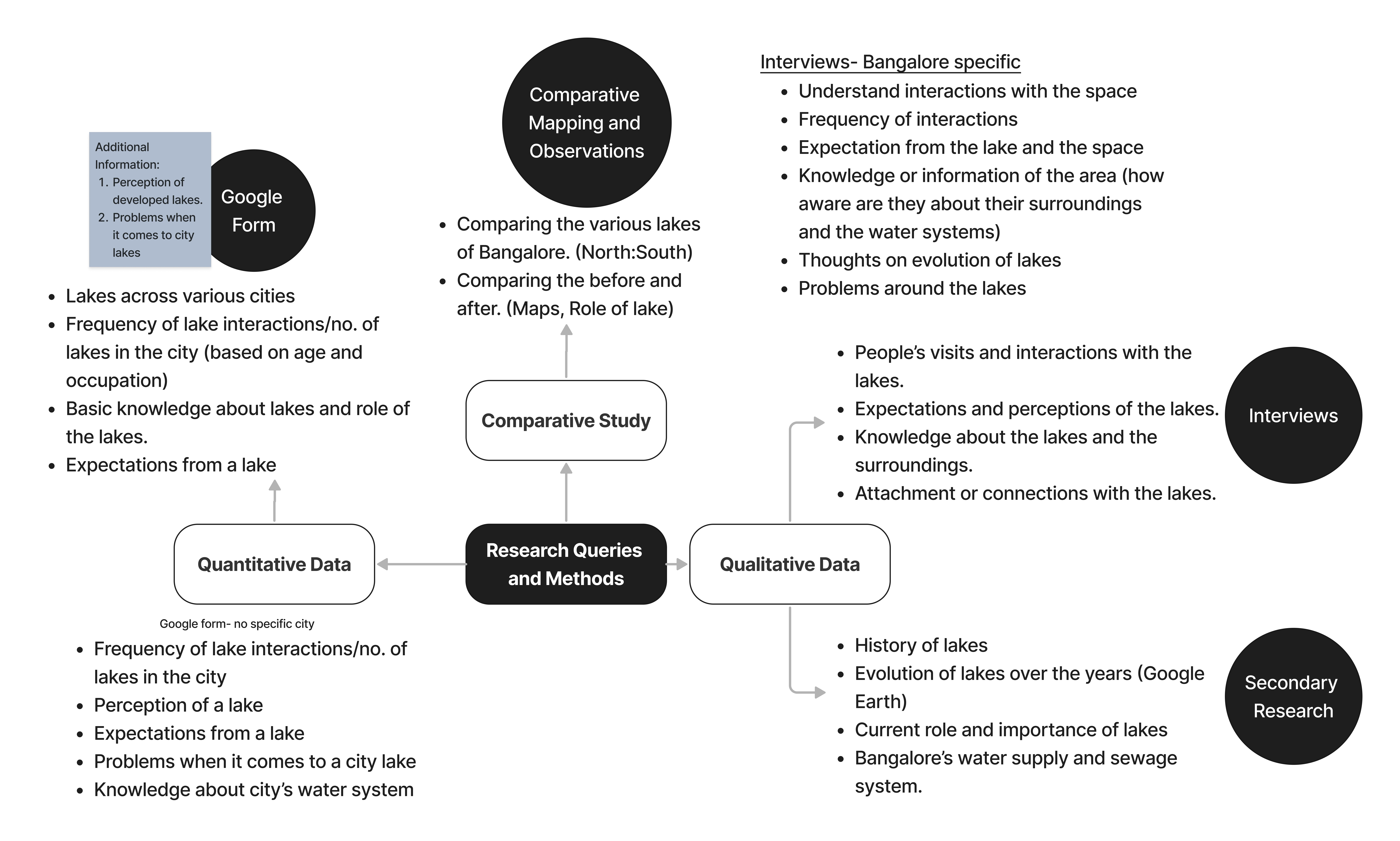
Broad Research Queries
Interview Questions
A rough list of potential questions to ask during an interview:
How often do you visit the lakes around you?
How many lakes in the city have you been to?
What do you usually do at a lake?
Have you been to any lake which hasn’t been through re-development? Did you like it?
Do you know who takes care of the lakes and redevelops them?
Do you know why the lakes are getting redeveloped?
Have you read about the formation of these lakes? Do you think they looked similar in size or shape before?
What do you think people used the lakes for before their redevelopment?
How are you supplied with water everyday? Where does your used water go?
How do you think lakes are getting so polluted so drastically now? Do you know of any measures being taken against it?
Do you think there are any other problems with the lakes?
Is there anything else you would like to add?
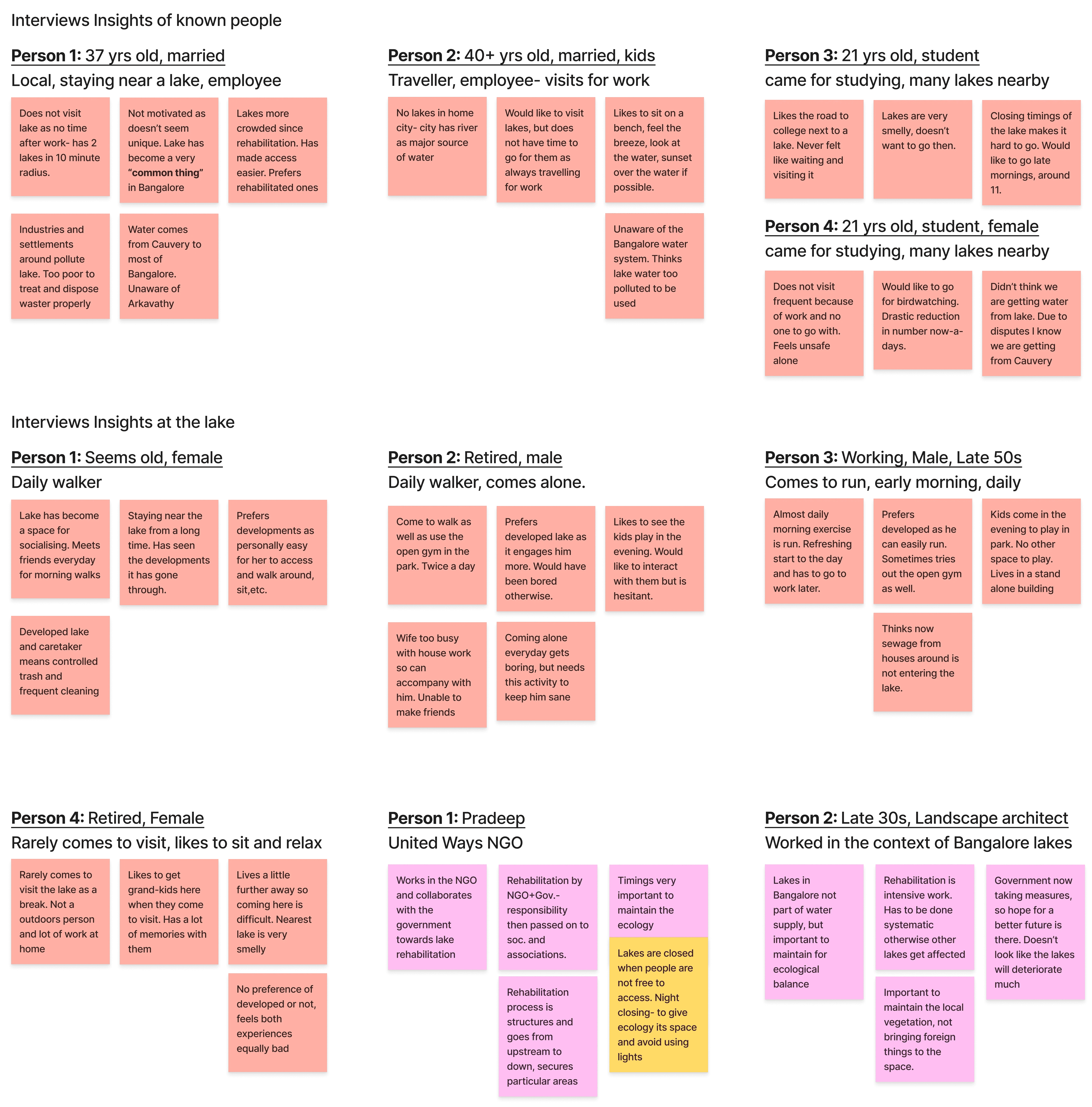
Interview Insights:
Secondary Research
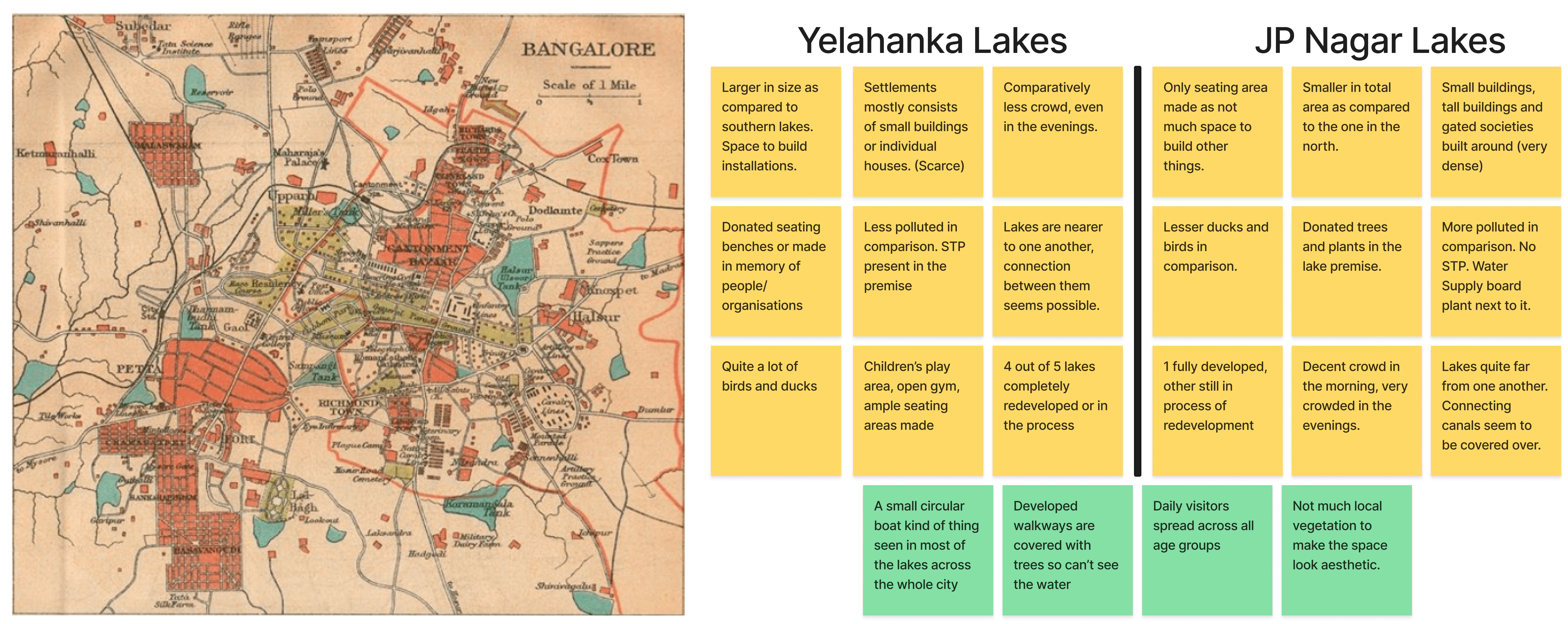
After completing primary research and conducting various interviews, I found that secondary research became one of the most important sources of information about the lakes. This extensive secondary research spanned nearly two months, during which I delved deeply into a vast web of data. The substantial amount of information gathered from these sources was instrumental in guiding me toward the final output for my project. The topics that I researched on for my secondary research are:
History and Origin of the lakes
Transformation of the lakes over the years
- changes in the lake landscape and the reason of the change
- problems due to these changesComparative Study of the landscape
- then and now
- rural and urban
- redeveloped and not redeveloped lakesSolutions for the problems of the lake
- Rehabilitation of the lakes
- K100 project (rehabilitation of the rajakaluves)The Possible Future
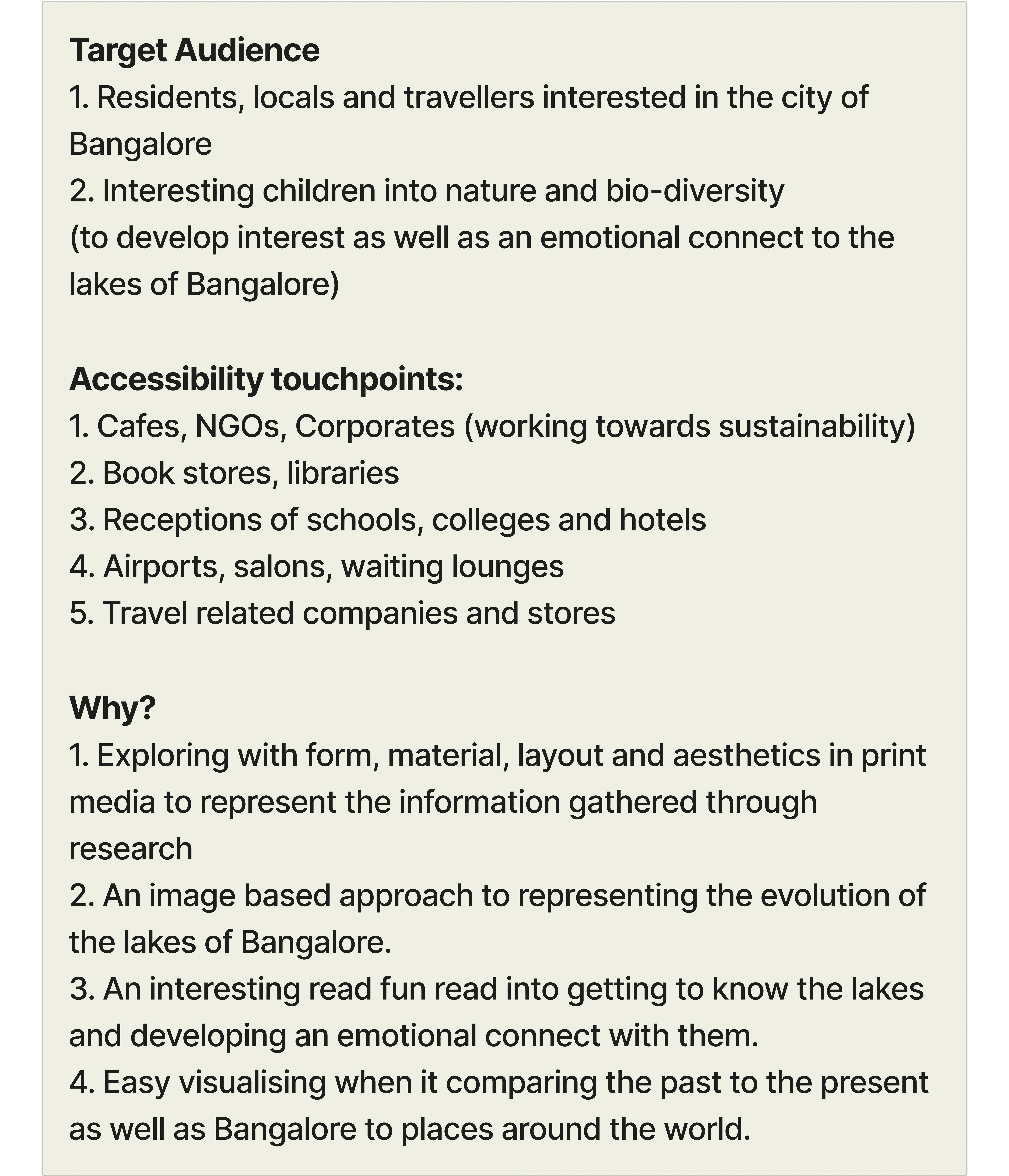
Given the extensive information on the lakes of Bangalore and the complex issues within this ecosystem, I decided to use my pre-thesis project to raise awareness. I chose to create a coffee table book as my final output, envisioning it being placed in bookstores, cafes, salons, and other public spaces to reach a broader audience. To make the book engaging and ensure that readers could easily understand and retain the complex information, I experimented with various publication layouts. These explorations aimed to enhance the interaction with the book, making it both visually appealing and informative.
The Final Output

Flatplan and Contents of Book
Rough layouting of the book and planning out the contents and flow of information in the book

Final Book
A few snippets of the final coffee table book design.
